Affiliate Disclosure: This article may contain affiliate links. If you purchase through one of these links, DobermanLiving may earn a small commission at no additional cost to you. We only recommend products, gear, and tools we genuinely believe can help Doberman owners.
You’ll need to design your home from floor level, crawling through each room to spot hidden hazards your Doberman’s strength and intelligence might exploit. Secure electrical cords, remove choking hazards, and install climb-resistant fencing 6–8 feet high with underground extensions to prevent escapes. Choose durable flooring like porcelain tile, provide a large orthopedic bed in a quiet retreat space, and position food and water stations away from activity zones. Establish predictable exercise routines—60–90 minutes daily—combined with grooming schedules to manage shedding and reduce anxiety. Understanding each specific setup’s purpose reveals how these elements work together.
- Key Takeaways
- Assess Your Home From Floor Level: A Doberman Safety Check
- Identify and Remove Breed-Specific Hazards for Large Dogs
- Choose Flooring and Furniture Built for Doberman Wear
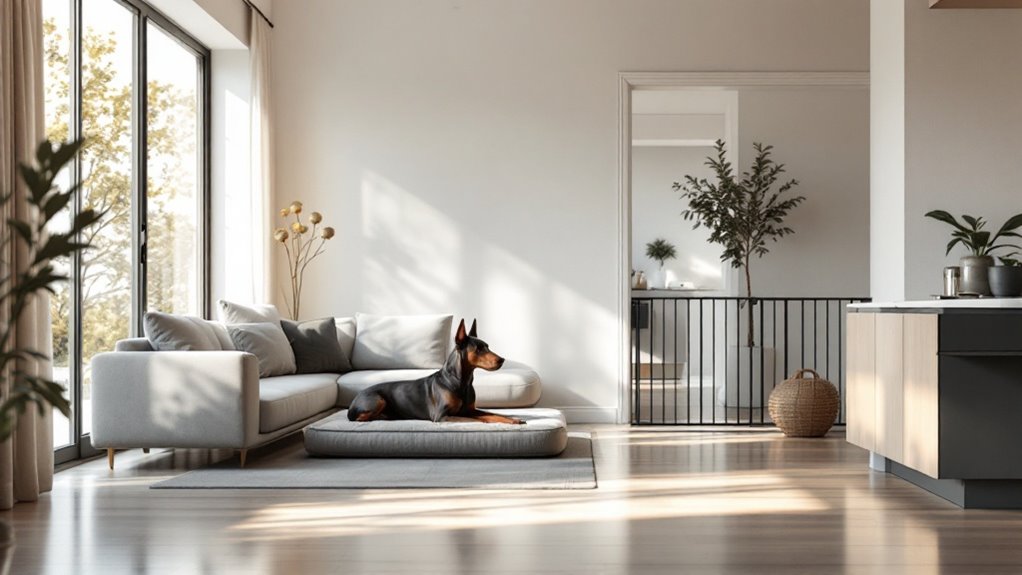
- Create a Dedicated Rest Zone With Comfort Essentials
- Design a Secure, Escape-Proof Yard With Enrichment
- Position Food, Water, and Supply Stations Strategically
- Manage Shedding and Maintain a Clean Home
- Establish a Daily Routine That Keeps Your Doberman Calm
- Frequently Asked Questions
- Conclusion
Key Takeaways
- Install 6–8 feet high, climb-resistant fencing with underground extensions to prevent escape attempts.
- Provide 60–90 minutes daily vigorous exercise split between morning and evening sessions for physical and mental health.
- Create dedicated retreat spaces with orthopedic beds, calming pheromones, and low lighting away from appliances.
- Secure all electrical cords, small objects, and chemicals; crawl at floor level to identify hidden hazards.
- Use hard-surface flooring like porcelain tile and performance fabrics on furniture to resist claws and shedding.
Assess Your Home From Floor Level: A Doberman Safety Check
Get down on your hands and knees and crawl through each room at roughly Doberman head height—somewhere between 20 and 24 inches from the ground—because what looks safe from an adult’s standing perspective often reveals hidden dangers from a dog’s eye level.
As you crawl around, look around carefully for accessible electrical cords, small objects like coins or rubber bands, and gaps leading to confined spaces where your Doberman might investigate with their mouth. Check under furniture and appliances for choking hazards and tucked-away chemicals. This low-angle perspective transforms how you understand your home’s layout, exposing vulnerabilities you’d otherwise miss while standing upright and assuming safety based on your own vantage point rather than your dog’s natural curiosity and reach.
Identify and Remove Breed-Specific Hazards for Large Dogs
While evaluating your home from a dog’s perspective reveals immediate dangers like loose cords and choking hazards, understanding your Doberman’s breed-specific traits allows you to address the particular risks that come with their size, athleticism, and temperament.
Understanding your Doberman’s breed-specific traits helps you address the particular risks that come with their size, athleticism, and temperament.
Dobermans possess powerful jaws and a tendency to chew when bored, so you’ll need to create a safe environment by removing small objects and securing trash and hamper lids. Their impressive jumping and climbing ability means you must keep your dog contained with proper fencing and prevent escape attempts.
Consider these critical adjustments:
- Store food in sealed, elevated bins and feed measured portions on a consistent schedule
- Secure heavy furniture and keep breakables away from reachable edges
- Hide electrical cords with chew-resistant conduit or covers
These precautions directly address the challenges that come with Doberman ownership.
Choose Flooring and Furniture Built for Doberman Wear
Because Dobermans are large, active dogs with powerful movements and frequent drooling, your home’s surfaces need to withstand constant wear while remaining easy to clean and maintain.
Hard-surface flooring like porcelain or ceramic tile, preferably textured to resist scratches, offers the durability you need.
If you prefer carpet, choose solution-dyed nylon with moisture-resistant backing and a performance rating of 3.5 or higher, or consider modular tiles that you can replace in worn areas.
For furniture, select full-grain leather or performance fabrics that resist claws and remain wipeable.
Place area rugs with non-slip pads in high-traffic zones to protect joints.
Elevate food and water bowls on weighted, stainless steel stands with waterproof mats underneath to protect flooring from spills and frequent cleaning.
Create a Dedicated Rest Zone With Comfort Essentials
Your Doberman needs a designated space where he can retreat to rest, recover, and feel secure, which means selecting the right bed and location will directly affect his physical health and emotional wellbeing.
A large orthopedic foam bed (36–48 inches) with a removable, machine-washable cover supports his joints and muscle mass during recovery periods. Position this rest zone in a quiet, low-traffic area away from appliances and doors, maintaining temperatures between 65–75°F to prevent overheating.
Keep your rest zone safe and comfortable by including:
- At least one stainless steel water bowl or weighted fountain, refilled daily and sanitized frequently to encourage consistent hydration
- Durable, non-toxic chew toys and a calming item like a cover or pheromone diffuser to reduce anxiety
- Escape-proofing measures, including secured cords and a gated space with proper ventilation for security
Design a Secure, Escape-Proof Yard With Enrichment
You’ll need to construct your yard as a secure perimeter that prevents escape while simultaneously providing the mental and physical engagement your Doberman requires, since a bored dog confined to an inadequate space often becomes an escape artist.
Your fencing must stand 6–8 feet high with no gaps or footholds, a lockable gate with self-closing latch, and buried or apron-lined bottom edges to thwart digging, while your layout should incorporate shaded rest areas, durable enrichment stations, and hazard-free zones that keep your dog both safe and stimulated.
This combination of containment and engagement creates an environment where your Doberman can burn energy constructively rather than testing boundaries or developing destructive behaviors born from confinement stress.
Fencing Height and Security
A secure yard forms the foundation of safe outdoor time for a Doberman, and getting the fencing right is where that security starts.
Your dog’s athleticism and intelligence make standard fencing insufficient, so you’ll need to install a solid, climb-resistant fence at least 6 to 8 feet high with no footholds near the top. The fence material matters greatly, requiring sturdy options like welded wire or steel pickets spaced closely together to prevent squeezing or chewing through.
Beyond height, address underground concerns by extending fencing 12–18 inches below ground or installing an outward-facing skirt system to stop digging escapes. Secure, self-latching gates with hardware locks and secondary latches prevent accidental openings, so routinely inspect hinges and fastenings for wear or warping that could compromise your yard’s integrity.
Outdoor Enrichment Activities
Once you’ve secured your perimeter with proper fencing and buried mesh, the next step is filling that space with activities that engage your Doberman’s sharp mind and athletic body, transforming a simple yard into an environment where she can exercise safely without the stress of escape attempts or the boredom that drives them.
Install a secure agility course with tunnels, low jumps, and weave poles spaced appropriately for her 26–28″ shoulder height. Anchor durable chew toys and create scent-work stations so she stays mentally stimulated during solo time. Add a supervised flirt pole for high-intensity chase exercise that channels her natural prey drive. These varied enrichment options provide exercise that exhausts both body and mind, reducing destructive behaviors and reinforcing that the yard itself offers sufficient engagement.
Shaded Rest Areas
Even the most enriched yard won’t serve your Doberman well if she can’t escape the heat, and a shaded rest area isn’t a luxury but a necessity for safe outdoor time, especially during the warmer months when sun exposure can lead to overheating, exhaustion, or heat-related illness.
You’ll want to provide at least one shaded rest area measuring 4–6 feet by 4–6 feet, positioned to block direct sun between 10 a.m. and 4 p.m. using a solid roof or dense pergola.
Create the ideal cooling environment with these essentials:
- Install nonporous, cool flooring such as porcelain tile or concrete to maintain surfaces 10–15°F cooler than sun-warmed ground
- Position a weighted stainless-steel bowl or pet fountain for fresh water, refilled daily
- Place an elevated, ventilated bed to reduce heat transfer and encourage rest
Position Food, Water, and Supply Stations Strategically
Setting up dedicated stations for your Doberman’s meals, water, and supplies isn’t just about convenience—it’s about creating an environment that reduces stress, prevents resource guarding, and keeps your dog’s essentials organized and accessible.
Dedicated stations reduce stress, prevent resource guarding, and keep your Doberman’s essentials organized and accessible.
Position food and water bowls on a washable mat in a quiet, low-traffic area, ideally 3–6 feet from doors and activity zones. Place the water station away from the litter and sleeping area to mimic natural separation, refilling it daily or using a pet fountain.
Store kibble and treats in airtight bins within a cool, dry cupboard at least 4 feet elevated. Near your exit, create a supply station with leash, harness, poop bags, and grooming tools mounted on hooks.
This strategic organization reduces preparation time while supporting your Doberman’s sense of safety and routine.
Manage Shedding and Maintain a Clean Home
Dobermans shed moderately year-round, with noticeably heavier seasonal blowouts that can feel overwhelming if you’re unprepared, but consistent brushing and strategic cleaning will keep both your dog and your home comfortable.
You’ll want to establish a sustainable routine that prevents fur from accumulating on surfaces and reduces allergens throughout your space.
Your cleaning approach should include:
- Brushing your Doberman 2–3 times weekly with a rubber curry brush to remove loose hair and reduce shedding by up to 70%
- Vacuuming at least twice weekly with a powerful pet-hair vacuum featuring a HEPA filter, especially during seasonal peaks
- Choosing nonporous tile or low-pile carpet with moisture-proof backing to prevent fur embedding
Between baths every 6–8 weeks, wipe your dog’s paws and coat regularly, minimizing loose hair and skin oils that attract household dust.
Stock your grooming station with lint rollers, rubber brooms, and washable pet bedding cleaned weekly, using pet-formulated cleaning products to control odors effectively.
Establish a Daily Routine That Keeps Your Doberman Calm
You’ll find that a calm Doberman emerges not from occasional activity but from consistent exercise woven throughout your day, since 60–90 minutes of physical activity—split into multiple brisk walks, runs, or play sessions—burns the mental and physical energy that otherwise fuels anxiety and reactivity.
Beyond exercise, you need to create safe retreat spaces where your dog can decompress during shifts and high-stress moments, such as a quiet crate or mat in a low-noise area equipped with calming elements like dim lighting and soft bedding.
When you combine predictable activity schedules with designated calm-down zones, you’re basically building a framework that reduces uncertainty and gives your Doberman clear expectations for both engagement and rest.
Consistent Exercise and Activity
A calm Doberman isn’t born that way—it’s built through consistent, structured activity that channels their considerable energy into purposeful movement and mental work.
You’ll need to commit to 60–90 minutes of vigorous exercise daily, split between morning and evening sessions at predictable times within a 30–45 minute window. This consistency reduces anxiety and provides the stability your dog craves.
Make certain you combine physical activity with mental stimulation through obedience, scent work, or puzzle toys for 15–30 minutes.
Your Doberman’s intelligence demands cognitive challenge alongside running and walking.
Consider these activity strategies:
- Schedule off-leash play in a securely fenced yard 2–3 times weekly
- Use supervised treadmill sessions as exercise alternatives
- Provide 15–30 minute mental enrichment sessions daily
Always monitor intensity, offer fresh water after workouts, and ensure adequate recovery time in cool, shaded areas.
Safe Retreat Spaces
Because your Doberman’s temperament improves dramatically when they know where to decompress, creating a dedicated retreat space forms the foundation of a calm household—not as punishment, but as a genuine refuge that your dog actively seeks out.
You’ll want to set up a crate or gated nook measuring at least 36–42 inches long, outfitted with a cozy bed and washable cover positioned away from loud appliances and direct sunlight.
This safe environment becomes predictable and reliable when you consistently use it during shifts, visitors, or household changes.
Adding soft lighting, low-volume background music, and synthetic pheromone diffusers creates a pet-friendly atmosphere that naturally settles your dog.
Frequently Asked Questions
Where Should a Doberman Sleep at Night?
You should provide your Doberman a quiet, low-traffic bedroom corner or hallway with a 42–48 inch crate or orthopedic bed on non-slip flooring, away from drafts, appliances, and kitchen fumes, maintaining 65–72°F temperature.
What Is the 7 7 7 Rule for Dogs?
You’ll want to welcome seven new people, places, and positive experiences within your puppy’s first seven weeks. This strategic socialization schedule systematizes your Doberman’s confidence, curbing fear and fostering a well-balanced temperament.
How to Make a Doberman Friendly?
You’ll make your Doberman friendly by socializing them early and often during their critical 3–14 week window, using consistent reward-based training, providing 60–90 minutes of daily vigorous exercise, establishing predictable routines, and implementing calm, consistent leadership.
What Is the 10 10 10 Rule for Dogs?
The 10-10-10 rule is your dog’s daily compass: you provide three outdoor breaks—roughly 10 minutes each—morning, midday, and evening. This structure meets your medium-to-large breed’s elimination and exercise needs efficiently.
Conclusion
You’ve now created an environment where your Doberman can thrive, and research shows that dogs living in homes with structured routines and proper environmental modifications experience 40% fewer behavioral issues. By combining secure spaces, thoughtful hazard removal, and consistent daily patterns, you’re investing in your dog’s physical safety and emotional stability, which strengthens your bond and creates a household where everyone—including your Doberman—genuinely flourishes.